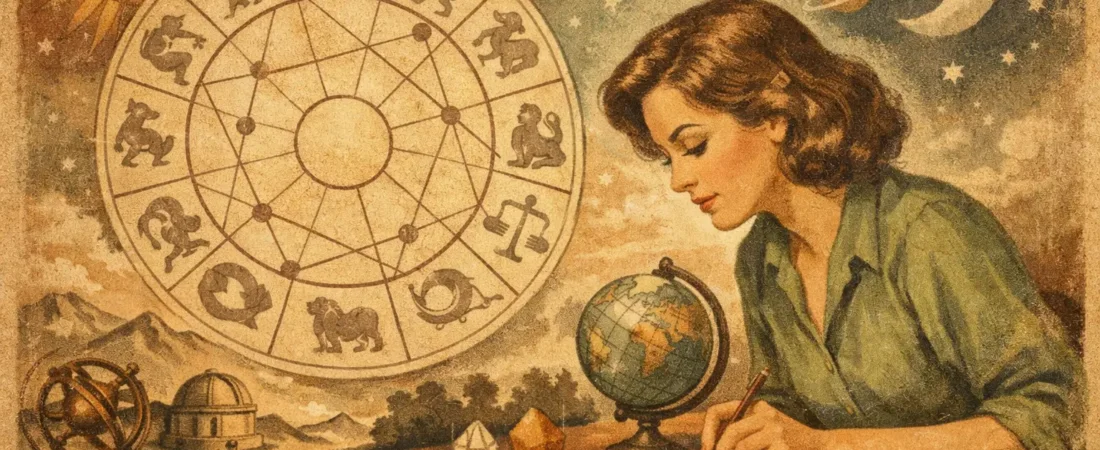
You can learn a lot from your birth chart in a single sitting, but only if you know what you are looking at. A good birth chart reading guide should not leave you buried in symbols or wondering whether one placement means your whole life is fixed. It should help you feel grounded, seen, and a little clearer about why certain patterns keep showing up in love, work, family, and your inner life.
Astrology is most helpful when it brings insight you can actually use. Your chart is not here to judge you. It is a map of tendencies, emotional needs, strengths, pressures, and timing. If you have been feeling stuck, confused, or pulled in two directions, reading your chart can offer language for what you are already sensing beneath the surface.
What a birth chart really shows
Your birth chart is a snapshot of the sky at the exact moment you were born. It is built from your birth date, birth time, and birthplace. That snapshot becomes a symbolic picture of your personality, your instincts, your communication style, your relationship patterns, your ambitions, and the kinds of lessons that may repeat across your life.
People sometimes expect astrology to hand them a script. That is not how a thoughtful reading works. A chart does not erase free will. It shows the energy you came in with and the kinds of experiences that may shape you more strongly than others. Two people can have similar placements and still live very different lives depending on choices, support systems, maturity, and timing.
That is why context matters. A single sign placement rarely tells the whole story. You are not just your Sun sign, and you are not doomed by one difficult aspect. The chart works as a whole.
Birth chart reading guide: start with the big three
If you are new to astrology, begin with the three placements that form the emotional and personal foundation of the chart: your Sun, Moon, and Rising sign. These are often called the big three because they describe core identity, emotional needs, and how you move through the world.
Your Sun sign speaks to your basic life force and sense of self. It shows what helps you feel purposeful and more fully alive. Your Moon sign is more private. It reflects your emotional nature, your comfort zone, and the way you process feelings. Your Rising sign, also called the Ascendant, colors first impressions and shapes how life meets you.
When these three work well together, a person often feels more internally aligned. When they pull in different directions, life can feel complicated in ways that are hard to explain. Someone with a bold Fire Sun, a sensitive Water Moon, and a cautious Earth Rising may look calm on the outside, feel everything deeply inside, and still crave excitement and freedom. That tension is not a flaw. It is part of what makes a chart honest.
The planets tell you what is happening inside you
After the big three, look at the personal planets: Mercury, Venus, and Mars. These placements often answer the practical questions people care about most.
Mercury shows how you think, speak, learn, and make sense of experience. If communication has been a struggle in relationships or at work, Mercury can explain a lot. Some placements process quickly and speak directly. Others need time, reflection, and emotional safety before they can express what they really mean.
Venus speaks to love, attraction, values, pleasure, and the way you give and receive affection. It can show why you keep choosing a certain kind of partner, what helps you feel appreciated, and what hurts you in love. Venus is not only romance. It also points to self-worth, taste, and what feels nourishing.
Mars shows drive, anger, desire, and how you take action. If you tend to avoid conflict, rush into it, or swing between motivation and burnout, Mars is worth close attention. This is one of the clearest places to look when you are trying to understand your energy, ambition, or frustration.
The outer planets matter too, but for a beginner, the personal planets usually offer the clearest starting point.
Houses show where life themes play out
A chart is divided into twelve houses, and each house represents an area of life. If signs and planets describe the kind of energy you carry, the houses show where that energy tends to show up.
For example, the seventh house is tied to partnerships and close relationships. The tenth house points to career, public image, and long-term goals. The fourth house speaks to home, family roots, and your inner foundation. When a planet lands in a house, it brings its energy into that life area.
This is where astrology becomes more personal. Two people can both have Venus in Cancer, but if one has it in the fourth house and the other has it in the tenth, love and value may play out in very different ways. One may seek emotional safety through home and family bonds, while the other may connect love to achievement, visibility, or public recognition.
That is one reason generalized astrology content can only go so far. The house placement changes the story.
Aspects explain tension, ease, and repeating patterns
If you have ever looked at a chart and seen a web of lines through the center, those are aspects. Aspects describe how planets relate to each other. They show where energy flows naturally and where inner friction can create struggle, growth, or both.
A trine often suggests ease and natural talent. A square can indicate tension that pushes a person to develop strength and awareness. An opposition may show a lifelong balancing act between two strong needs. A conjunction blends energies together so closely that they become a major theme in the personality.
This part of a birth chart reading guide matters because aspects often explain why someone feels conflicted. You may deeply want closeness but fear losing independence. You may be naturally gifted in communication but hesitate to trust your own voice. These contradictions are common, and they do not mean your chart is bad. They usually point to areas where life is asking for maturity, healing, or better self-understanding.
How to read your chart without getting overwhelmed
The biggest mistake beginners make is trying to interpret everything at once. A birth chart has a lot of moving parts, and not every placement carries equal weight in every season of life.
Start by asking one real question. Maybe you want insight into love, career, family stress, or why you keep repeating the same emotional pattern. Then look at the parts of the chart most connected to that issue. For relationships, pay attention to Venus, Mars, the Moon, the seventh house, and major aspects involving those placements. For career questions, look closely at the tenth house, Saturn, Mars, and your Sun.
It also helps to notice repetition. If several parts of the chart point to the same theme, that theme is probably important. For example, if your Moon is in a protective sign, your fourth house is emphasized, and Saturn aspects your Venus, emotional safety may be a major life lesson in both family and romantic relationships.
Try not to turn every placement into a prediction. Astrology is often better at describing the pattern than forcing a fixed outcome. It can show where you are vulnerable, what you need, and what kind of support helps you make better choices. That alone can change a lot.
Why a personal reading can go deeper
Self-study can be comforting and empowering, but there comes a point where outside insight helps. It is easy to overidentify with one placement or miss the deeper connection between several chart factors. It is also easy to read astrology when you are upset and only see the parts that confirm your fear.
A personal reading brings perspective. It can connect the chart to the real questions you are living with right now, not just abstract meanings from a book or app. That matters when you are dealing with heartbreak, uncertainty, family pain, or a major decision. The chart becomes less about labels and more about guidance.
For many people, the most healing part of astrology is being understood clearly. A compassionate reading can name what you have been carrying and help you move forward with more trust in yourself. That is the kind of support Tarot Readings by Lyman Holton believes in across spiritual tools, whether someone comes in through tarot or wants astrology to make sense of a turning point.
A simple way to make astrology useful
The most helpful charts are not the ones read perfectly. They are the ones read honestly. If a placement shows sensitivity, do not treat it as weakness. If it shows intensity, do not assume it means chaos. Every part of the chart has a higher expression and a more difficult one. Growth often comes from learning the difference.
When you read your birth chart, look for compassion before certainty. Ask what the chart is teaching you about your needs, your habits, your fears, and your strengths. Let it confirm what is true, but also let it gently challenge what is no longer serving you.
Your chart does not ask you to become someone else. It asks you to understand yourself well enough to make clearer choices from here.
Leave a Reply
You must be logged in to post a comment.