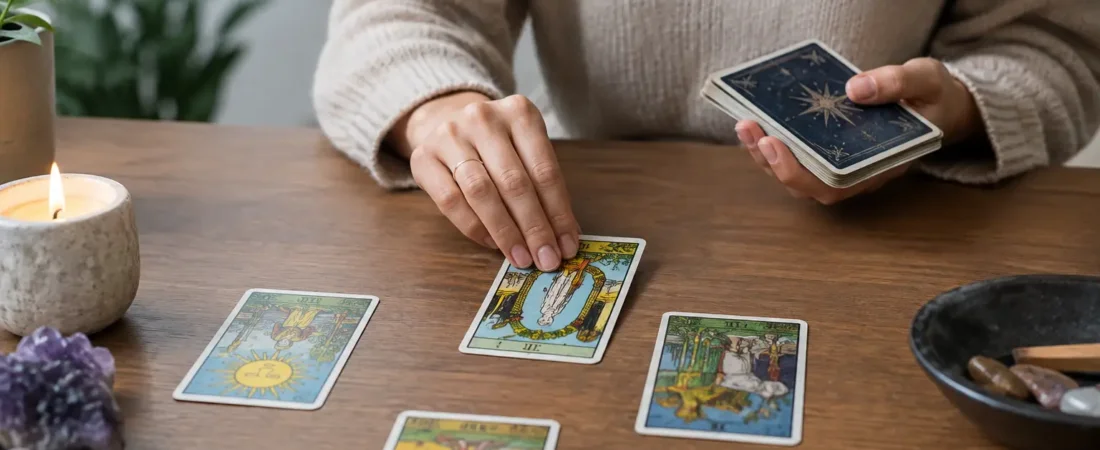
A reversed card can make even an experienced reader pause. You may see the card turned upside down and immediately worry that something bad is coming. But when you read tarot reversals, the goal is not to turn every positive card negative or predict disaster. A reversal is often a quieter message: something may be delayed, held inside, resisted, misunderstood, or ready to change.
For someone asking about love, work, family, or a major decision, that distinction matters. Tarot is meant to bring clarity and compassion to what you are living through. Reversed cards can be some of the most honest cards in a reading because they show where energy is tangled, where healing needs attention, and where you may have more choice than you realize.
What Reversed Tarot Cards Really Mean
A tarot reversal happens when a card appears upside down in a spread. The image is the same, but its energy may be expressed differently. Think of it less as a complete opposite and more as a shift in how the card is moving through a situation.
The upright Two of Cups, for example, often speaks of connection, mutual feelings, partnership, and emotional openness. Reversed, it might point to a misunderstanding, uneven effort, poor communication, or a relationship that needs an honest conversation. It does not automatically mean a breakup. The surrounding cards, the question, and the real circumstances tell you whether the issue is temporary distance, a pattern that needs work, or a deeper incompatibility.
The same is true with cards that people find frightening. The Tower reversed may show someone resisting a necessary change, processing a recent upheaval privately, or slowly rebuilding after a difficult time. The Devil reversed can indicate release from an unhealthy attachment, even if that release is uncomfortable. A reversal can be a warning, but it can also be a sign of awareness and progress.
How to Read Tarot Reversals in Context
The best way to read a reversal is to begin with the question. A card does not exist apart from the person sitting in front of you or the concern in their heart. If someone asks whether they should leave a draining job, the Eight of Cups reversed could suggest fear of walking away, unfinished emotional business, or a return to a situation they thought they had outgrown. If they ask about reconnecting with someone from the past, the same card may point to a relationship cycle that has not truly been resolved.
Next, look at the card’s core meaning before trying to interpret its reversal. Ask yourself: what does this card usually encourage, reveal, or challenge when upright? Then consider what might be blocked, internalized, delayed, excessive, or beginning to reverse.
A reversed card can commonly speak to one of several themes:
- blocked or resisted energy
- an inward, private, or emotional process
- delay, timing, or a lesson that is not complete
- an imbalance, excess, or lack of expression
- release, recovery, or a turning point
You do not need to force all five meanings onto every card. Choose the one that fits the question and the story the rest of the spread is telling. Tarot becomes confusing when each card is treated as an isolated definition. It becomes helpful when you listen for the conversation between the cards.
Imagine the reversed Ace of Pentacles in a career reading. Beside the Three of Pentacles and the upright Magician, it may say that a promising opportunity needs better planning, clearer communication, or more confidence before it can grow. Beside the Five of Pentacles and Ten of Wands reversed, it may point to financial stress, exhaustion, or the need to stop carrying a burden alone. The card has not changed its identity. Its message has become personal and specific.
Let the Spread Position Guide You
Position matters just as much as the card itself. In a past position, a reversal may describe an unresolved experience that still influences the present. In a challenge position, it may show what is being avoided or blocked. In advice, it can reveal the inner work required before taking action. In an outcome position, it may suggest that a situation is still developing rather than fixed.
This is especially reassuring when someone wants a clear yes or no answer. A reversed card often reminds us that a situation may not be ready for a final answer yet. That is not tarot being vague. It can be a compassionate truth: more information, healing, or communication may be needed before the path becomes clear.
Reversals in Love and Relationship Readings
Love questions bring a lot of emotion to the table. When you are worried about someone pulling away, waiting for a text, grieving a breakup, or trying to decide whether to trust again, a reversal can feel very personal. This is where gentle, truthful interpretation matters.
The Lovers reversed may reflect a mismatch in values, difficulty making a commitment, temptation, or a choice being avoided. The Knight of Cups reversed can show romantic words without consistent action, emotional immaturity, or feelings that are being hidden. The Four of Wands reversed may suggest tension at home, uncertainty around commitment, or a celebration that does not feel as secure as it appears.
Still, no single reversal can tell you exactly what another person feels or guarantee what they will do. Tarot can show patterns, emotional dynamics, and likely directions. It can help you ask better questions: Is this relationship reciprocal? What am I accepting out of fear? What boundary would bring me peace? What do I need to know before I make contact?
That is where a reading can be deeply supportive. Instead of chasing a prediction, you are given space to understand your own heart and make a choice that honors it.
A Simple Method for Beginners
If reversals make you nervous, start with a simple three-card spread: the situation, what is hidden or blocked, and the most helpful next step. Shuffle normally and allow reversed cards to appear if they do. There is no need to deliberately turn cards upside down unless that is part of your personal practice.
When a reversal comes out, pause before reaching for a guidebook. Notice your first feeling. Does the image seem stalled, private, weakened, excessive, or ready to release something? Then connect that feeling to the card’s traditional meaning and the question you asked.
Keep a journal of your readings. Write down the card, its position, your first interpretation, and what unfolds later. Over time, you will see how reversals speak in your own readings. Some readers find reversals extremely detailed. Others use them only occasionally. Neither approach is more spiritual or more correct. The right method is the one that helps you stay grounded, clear, and honest.
When Not to Overread a Reversal
A reversal is not a reason to panic, send a message you will regret, quit your job overnight, or assume the worst about someone you love. Tarot offers insight, not a replacement for your judgment, practical information, or direct conversation.
Be especially careful when you are emotionally overwhelmed. If you pull the same cards repeatedly because you want a different answer, the reading may be reflecting anxiety more than new guidance. Put the deck down for a while. Take a breath, write out what you already know, and return when you can hear the message without fear.
A compassionate tarot reading should leave you with more perspective, not less power. Even difficult cards can show you where to be honest, where to slow down, and where you have an opportunity to choose differently.
Reversed cards do not mean you are doomed or doing tarot wrong. They are invitations to look beneath the surface with patience. Sometimes the clearest answer is not a dramatic prediction, but the quiet realization that your next step can be wiser, kinder, and more aligned with what you truly need.
Leave a Reply
You must be logged in to post a comment.